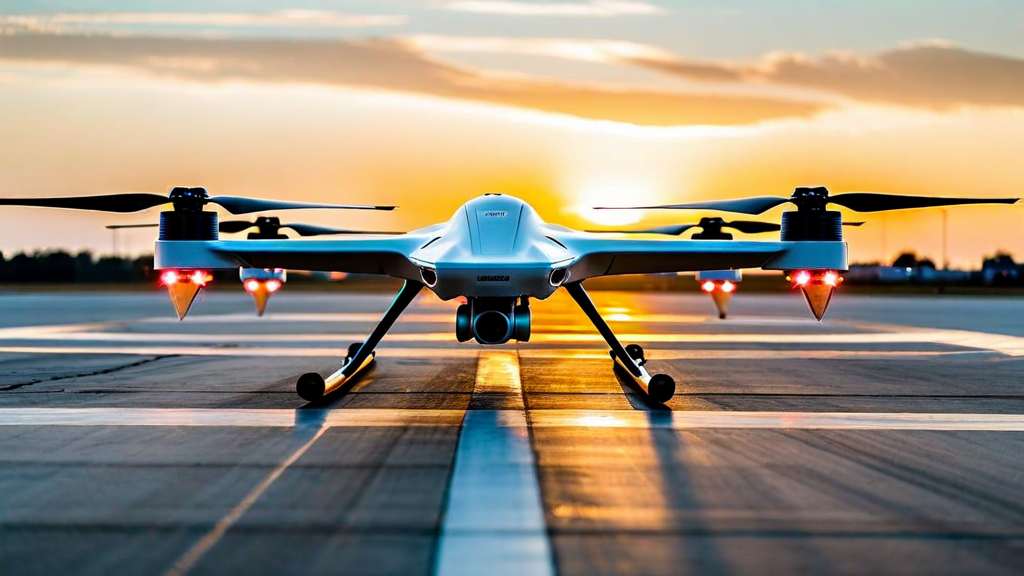
The commercial UAV market has crossed a maturity threshold that is fundamentally changing how large organizations think about asset inspection, data collection, and operational monitoring. Where drones were once a curiosity deployed for marketing footage or one-off promotional projects, enterprise organizations now treat unmanned aerial systems as core operational infrastructure — technology that must justify its place in the budget by delivering measurable cost reduction, safety improvement, and data quality gains at scale.
This shift has been driven by a convergence of hardware capability, regulatory clarity, and software maturity. Modern industrial drones can carry mission-grade sensor payloads in airframes that weigh under four kilograms, fly autonomously on pre-planned routes without active pilot input, and feed captured data directly into enterprise analytics systems through standardized APIs. The result is a class of aerial tools that slot naturally into industrial workflows rather than requiring those workflows to be redesigned around a new technology.
Energy Infrastructure Inspection
Few industries have adopted commercial drone operations more aggressively than upstream and midstream oil and gas. The economics are straightforward: a single helicopter-based pipeline corridor survey covering 100 kilometers costs roughly $18,000 to $25,000 when pilot time, aircraft rental, and mobilization expenses are accounted for. The same survey, conducted with a fleet of two or three industrial quadrotors operated by a two-person ground crew, runs between $3,500 and $6,000 — a 65% to 80% cost reduction before data quality considerations are even introduced.
The data quality argument is equally compelling. Helicopter surveys are typically conducted at altitudes of 500 to 1,500 feet, capturing wide-area imagery that identifies gross anomalies but misses subtle corrosion patterns, joint displacement, or vegetation encroachment that requires closer inspection. Industrial drones conducting corridor surveys at 50 to 150 feet AGL can capture sub-centimeter resolution imagery that flags early-stage defects before they escalate to failures. Combined with thermal imaging payloads that identify hot spots around electrical components or insulation failures, drone inspection programs are measurably improving maintenance decision quality across the sector.
Flare stack inspection represents a particularly high-value application. Accessing flare tips for manual inspection has historically required expensive scaffolding erection or specialized rope-access crews working in hazardous conditions. A properly equipped industrial drone can complete a flare tip inspection — including thermal imaging of combustion hardware and close-range visual documentation of tip geometry — in under 45 minutes with zero personnel exposure to elevated risk.
Construction and Infrastructure Monitoring
Large infrastructure projects generate enormous volumes of progress documentation requirements. Owners, contractors, and financing institutions all need regular confirmation that construction is proceeding on schedule and that completed work matches design specifications. Historically this documentation has been compiled through a combination of on-site photography, manual surveying, and periodic aerial photography from rented fixed-wing aircraft or helicopters. Each of these methods is either labor-intensive, expensive, or both.
Weekly drone surveys of active construction sites change this calculus significantly. A typical commercial construction site of two to five hectares can be fully documented in a single drone flight of 30 to 45 minutes, producing an overlapping photo set that can be processed into an orthomosaic — a geometrically corrected aerial map with centimeter-level spatial accuracy — and a 3D point cloud showing current as-built conditions. Comparing successive weekly surveys quantifies earthwork volumes, tracks structural steel erection progress, and identifies areas where construction is deviating from design tolerances before those deviations become expensive to correct.
Volumetric measurement is one of the highest-value applications within construction monitoring. Calculating the volume of a stockpile — whether aggregate, topsoil, ore, or any bulk material — has traditionally required a surveying crew to take manual grade shots across the stockpile surface, a process that takes hours and introduces significant measurement uncertainty. A drone equipped with a standard RGB camera can complete the same measurement in ten minutes, with photogrammetric processing delivering volumetric accuracy within two to three percent of ground-truth measurement.
Precision Agriculture and Crop Monitoring
Agriculture was among the first industries to recognize the potential value of aerial sensors for crop health monitoring, but early adoption was constrained by the cost and complexity of manned aircraft surveys. The emergence of multi-rotor and fixed-wing UAVs capable of carrying multispectral and thermal cameras has transformed the precision agriculture landscape, making high-resolution crop health data accessible to mid-size farm operations that cannot justify the cost of aerial photography on the traditional model.
Multispectral imaging is the cornerstone of drone-based crop analytics. By capturing imagery in multiple wavelength bands beyond the visible spectrum — typically including near-infrared and red-edge channels — multispectral cameras enable calculation of vegetation indices that reveal crop stress patterns invisible to standard RGB photography. The normalized difference vegetation index (NDVI), the most widely used of these metrics, correlates closely with chlorophyll content and photosynthetic activity, making it a reliable early indicator of water stress, nutrient deficiency, pest pressure, and disease.
The operational value of early detection is substantial. A producer who identifies a nitrogen deficiency in a 50-hectare wheat field at the stem extension growth stage still has time to apply a targeted top-dress fertilizer application and recover close to full yield potential. The same deficiency identified at flag-leaf emergence has fewer remediation options. A drone-based monitoring program that enables two to three more crop health checks per growing season than traditional ground scouting protocols translates directly to better agronomic decision timing and measurable yield protection.
Logistics and Delivery Operations
Drone delivery has attracted significant media attention, but the operational reality of commercial last-mile UAV delivery is more nuanced than headlines suggest. The most commercially viable drone delivery applications today are not urban package delivery — regulatory complexity and population density make that market challenging in most jurisdictions — but rather remote-area logistics, emergency medical supply delivery, and campus-to-campus enterprise distribution where a drone can replace a ground vehicle trip over a known, controllable route.
Medical supply delivery to remote healthcare facilities is one of the clearest value cases. In areas where road infrastructure is poor or seasonal flooding makes ground transport unreliable, drone delivery can maintain consistent supply chains for blood products, vaccines, diagnostic specimens, and essential medications. The time-criticality of many medical supplies — packed red blood cells have a limited shelf life, and the window for effective stroke treatment is measured in hours — makes aerial delivery's speed advantage decisive in a way that is harder to replicate for general consumer goods.
Enterprise campus delivery, where a drone covers a fixed route between a central warehouse and a production or research building, offers a more immediately scalable model. The regulatory environment for operations within a controlled facility boundary or over a dedicated overfly corridor is substantially less complex than operations over public land, and the predictability of the route enables straightforward integration with inventory management systems and automatic dispatch triggering.
Mining and Quarry Operations
The mining sector has developed one of the most mature enterprise drone programs of any industrial vertical. Volumetric measurement of pit geometry, blast face documentation, haul road condition monitoring, and environmental compliance surveying are all established use cases with proven return on investment. Large mining operations have moved beyond ad hoc drone deployments to formal drone programs with dedicated operators, standardized data workflows, and performance metrics tied to operational efficiency improvements.
Blast face documentation illustrates the operational specificity that distinguishes mature enterprise drone programs from early-adopter experimentation. Before a controlled blast, accurate documentation of the face geometry — the dimensions, angle, and structural characteristics of the rock face to be fragmented — improves blast design, which in turn affects fragmentation quality and downstream crushing efficiency. Drone photogrammetry of a blast face takes fifteen minutes and produces a geometrically accurate 3D model that replaces manual measurement methods requiring crews to work in proximity to an unstable face.
Key Takeaways
- Industrial drone adoption is being driven by proven ROI across energy, construction, agriculture, and mining — not experimental use cases.
- Pipeline corridor inspection with drones reduces survey costs by 65–80% versus helicopter methods while improving image resolution and inspection frequency.
- Construction site photogrammetry enables volumetric measurement accuracy within 2–3% of ground-truth, replacing labor-intensive manual surveying.
- Multispectral crop monitoring enables early detection of stress and disease, improving agronomic decision timing and protecting yields.
- Enterprise drone programs succeed when treated as infrastructure — with standardized workflows, trained operators, and defined data pipelines.
- The most economically viable delivery applications today are remote medical supply and controlled-route enterprise campus operations.
Conclusion
The breadth of established industrial drone applications reflects a technology that has moved well beyond its novelty phase. Enterprise organizations that deployed their first drone programs three to five years ago are now in the process of standardizing, scaling, and integrating those programs into core operational workflows. The competitive question for organizations that have not yet made that transition is no longer whether drone operations deliver value — the evidence base for that proposition is extensive — but how to structure a program that captures maximum value given their specific operational context.
The hardware, software, and regulatory infrastructure needed to support serious enterprise drone programs is now mature enough to support that transition. Organizations investing in drone capabilities today are not taking a technology risk; they are making an operational efficiency investment with a well-defined return profile and a growing ecosystem of vendors, integrators, and trained personnel to support execution.