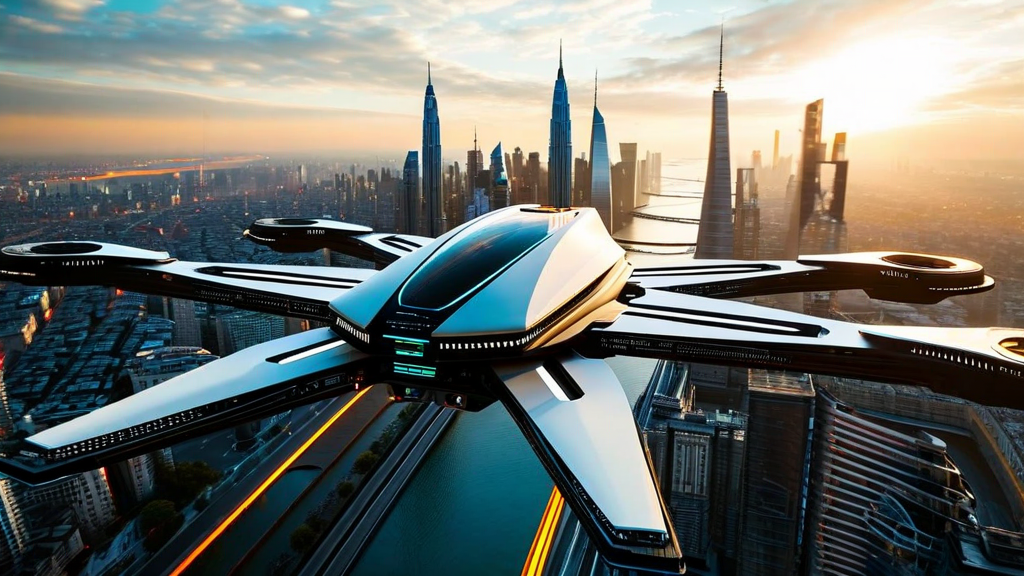
Commercial drone technology is advancing on multiple fronts simultaneously: battery chemistry and propulsion efficiency are extending endurance, onboard compute is making true edge-AI autonomy practical, sensor miniaturization continues to expand the range of useful payloads that fit within small-aircraft weight budgets, and regulatory frameworks in major markets are progressively expanding the operational envelope that commercial programs can exploit. Each of these trends is significant individually; in combination, they point toward a commercial UAV landscape over the next decade that will look substantially different from the current state of the art.
Understanding which trends are technically mature and on a near-term adoption curve versus which are genuinely speculative is important for operators and organizations planning multi-year drone program investments. The history of commercial drone adoption includes both technologies that delivered on their promise much faster than expected — photogrammetric survey accuracy improvement is an example — and technologies that have consistently been "three to five years away" for longer than that. This analysis attempts to distinguish between the two categories with as much technical grounding as the current state of knowledge permits.
AI-Driven Autonomy
Artificial intelligence, and specifically deep learning applied to computer vision, is the technology that will most fundamentally change the operational character of commercial drone systems over the next five to ten years. Current autopilot autonomy is "task autonomy" — the drone can execute a pre-planned mission without continuous pilot input, but the mission must be pre-defined and the drone has limited ability to respond intelligently to unexpected observations. AI-driven autonomy introduces "decision autonomy" — the ability to observe the environment, interpret what is observed, and modify behavior in response.
Automated defect detection is the most immediately valuable application of onboard computer vision for industrial drones. A drone conducting a pipeline corridor inspection currently captures thousands of high-resolution images that must be reviewed by human analysts after the flight to identify defects. An AI-powered detection system running onboard during the flight can flag potential anomalies in real time, commanding the drone to dwell on flagged locations for additional imaging, adjusting the flight path to capture complementary views, and delivering a prioritized list of findings rather than a raw image set. The labor reduction and review speed improvement from this capability are substantial.
Semantic scene understanding — the ability to identify and classify objects, structures, and terrain features from drone imagery — is advancing rapidly with the emergence of foundation models trained on very large datasets. Models capable of identifying specific infrastructure component types (valve types, fitting geometries, conduit routing) from aerial and close-range imagery without the extensive domain-specific training data previously required are beginning to emerge. This development lowers the barrier to deploying AI-assisted inspection for specialized applications where the volume of training data available has historically been insufficient to train reliable detection models.
Propulsion Advances: Hydrogen Fuel Cells and Hybrid Systems
Battery-electric propulsion has been the default for commercial small drones since the platform category emerged, and it will remain dominant for missions within the endurance range of lithium battery technology — roughly 20 to 60 minutes at practical payload capacities depending on platform size. But for missions requiring longer endurance, the energy density limitations of current lithium cell chemistry create genuine operational constraints that alternative propulsion approaches are beginning to address.
Hydrogen fuel cells offer a theoretical energy density advantage of roughly 4 to 5x compared to current lithium batteries at the system level (accounting for the weight of the fuel cell stack, hydrogen storage, and power management electronics). In practice, hydrogen-electric drone systems being demonstrated commercially are achieving 2 to 3x endurance improvement over equivalent battery-electric platforms — enough to change the operational calculus for applications like long-distance pipeline corridor inspection, extended maritime patrol, and multi-hour agricultural surveys that currently require multiple battery swaps or intermediate landing for battery exchange.
The practical barriers to widespread hydrogen fuel cell adoption in commercial drones include the weight and cost of compressed hydrogen storage systems, the current limited availability of hydrogen refueling infrastructure outside specialized industrial facilities, and the operational complexity of handling compressed hydrogen in field environments. These barriers are not fundamental — they are engineering and logistics challenges that will yield to sustained development effort and infrastructure investment. Several commercial hydrogen fuel cell drone programs have demonstrated sustained flights exceeding 4 hours, validating the technical path while highlighting the logistics challenges that remain.
Hybrid propulsion — combining a small internal combustion engine generator with a battery buffer — represents a near-term alternative to hydrogen for applications requiring extended endurance. The generator provides continuous electrical power while the battery handles peak demand during takeoff and aggressive maneuvering. Heavy fuel (JP-5, JP-8, or diesel) versions of hybrid UAV powertrains are attractive to military and government customers because of the logistics advantages of operating from the existing military fuel supply chain, but the noise, vibration, and emissions characteristics of combustion-based hybrid systems limit their appeal for commercial civilian applications near populated areas.
Advanced Materials and Manufacturing
Structural material advances in commercial drones are following the same trajectory that has driven weight reduction in manned aviation for decades: progressive substitution of heavier conventional materials with lighter, stronger composites and additive-manufactured components optimized for the specific load cases they experience. The current state of the art — carbon fiber reinforced polymer arms and plates with aluminum hubs and motor mounts — leaves meaningful weight reduction opportunity on the table that advanced manufacturing techniques can capture.
Continuous fiber additive manufacturing (CFAM) — 3D printing that embeds continuous carbon, Kevlar, or fiberglass filaments into a thermoplastic matrix during deposition — is beginning to enable production of structural components with specific stiffness approaching hand-laid carbon fiber prepreg at a fraction of the tooling cost. For low-to-medium production volumes like those typical in commercial industrial drone manufacturing, CFAM offers the ability to produce geometrically complex structural components without the mold and layup labor costs that make prepreg composite manufacturing expensive at small scale.
Morphing structures — components that change shape in response to control inputs or environmental conditions — represent a longer-term development that could fundamentally change how drone aerodynamics are managed. Variable-pitch propellers (which change blade pitch rather than rotational speed to modulate thrust) are a commercially available example of morphing propulsion that improves efficiency across a wider operating range. More ambitious morphing concepts — variable-span wings on hybrid VTOL platforms, adaptive rotor blades that adjust twist distribution for optimal efficiency at different speeds — are being demonstrated in research settings and will move toward commercial application as manufacturing methods for reliable, lightweight morphing mechanisms mature.
Edge Computing and Onboard Intelligence
The computational resources available on commercial drone platforms have increased dramatically over the past five years, driven by the availability of power-efficient neural processing units (NPUs) designed for edge AI inference. A current state-of-the-art industrial drone platform can run real-time computer vision inference at 15 to 30 frames per second for object detection and segmentation tasks using an onboard NPU consuming 5 to 15 watts — a power budget compatible with extended flight operations. This was not achievable at practical efficiency levels three years ago.
The most immediate commercial impact of this increased compute capability is in autonomous mission adaptation — the ability for the drone to modify its planned trajectory and sensor collection behavior in response to what it observes, without requiring ground-to-air communication links for the decision. In environments where radio communication is unreliable or bandwidth is limited, fully onboard decision-making enables autonomous inspection quality that would not be achievable with ground-processed or cloud-processed decision loops. The implication for industrial inspection programs is that future platforms will be capable of conducting "smart" inspections that concentrate data collection on interesting observations rather than mechanically executing pre-planned patterns — reducing data volume while increasing inspection relevance.
Urban Air Mobility and Advanced Air Mobility
Urban Air Mobility (UAM) and Advanced Air Mobility (AAM) represent the scaling of drone technology toward passenger-carrying and cargo aircraft in the electric vertical takeoff and landing (eVTOL) configuration. While the aircraft involved are significantly larger than commercial industrial drones, the technology trajectory of eVTOL development has direct implications for commercial UAV operators: certification pathways being developed for eVTOL aircraft will influence how regulators approach type certification for advanced commercial drones, and propulsion and avionics component supply chains developed for the eVTOL market will drive down costs and improve performance for the entire electric vertical flight sector.
The commercial drone freight market — particularly for logistics applications in the 50 to 500 kg payload class that falls between current small commercial drones and conventional air cargo — is an intermediate opportunity that several developers are targeting with platforms that benefit from both the UAV technology development trajectory and the eVTOL certification and operational framework. These platforms operate at the interface between current commercial drone regulatory frameworks and the emerging AAM regulatory structure, and their development progress will be an important indicator of how regulatory requirements and operational procedures will evolve for larger and more complex commercial unmanned systems.
Swarm and Fleet Intelligence
As described earlier in this series, multi-drone coordination is one of the most commercially impactful developments in UAV operations. The longer-term trajectory of swarm technology development points toward increasingly large and heterogeneous fleets operating with progressively less human supervision. Current commercial swarm programs typically involve 2 to 8 vehicles and require a supervising operator monitoring the fleet's status and available for intervention. The next generation will support larger fleets — 10 to 50 vehicles — with higher levels of onboard autonomy that allow a single operator to supervise rather than actively monitor, and eventually move toward fleet operations that require human oversight at the mission-level rather than the vehicle-level.
Heterogeneous fleet coordination — deploying different vehicle types with different sensor capabilities in coordinated missions — is an important extension of single-platform swarm operations. A heterogeneous fleet might include fixed-wing platforms for high-speed wide-area coverage, multi-rotor platforms for close inspection of flagged anomalies, and ground vehicles for sample collection or detailed measurement — all coordinating through a unified mission management system that dynamically assigns tasks to the most appropriate platform based on current mission state.
Key Takeaways
- AI-driven autonomy — particularly automated defect detection and real-time mission adaptation — will be the most commercially transformative near-term development for industrial drone programs.
- Hydrogen fuel cell propulsion is demonstrating 2–3x endurance improvement over battery-electric at equivalent payload, with logistics infrastructure as the primary barrier to wider adoption.
- NPU-equipped industrial drones can now run real-time object detection at 15–30 fps within a 5–15W power budget, enabling fully onboard decision-making without communication dependency.
- Continuous fiber additive manufacturing is reducing the tooling cost barrier for custom composite structural components, enabling complex geometries at production scales not feasible with traditional prepreg methods.
- The eVTOL certification pathway development will influence how advanced commercial drones are certified and operated, establishing procedures and standards that apply across the vertical flight spectrum.
- Fleet intelligence will progress from supervised multi-drone operations (2–8 vehicles) to autonomous heterogeneous fleets (10–50+ vehicles) requiring operator oversight at mission rather than vehicle level.
Conclusion
The commercial drone technology landscape over the next decade will be defined by the convergence of more capable hardware — better batteries, hydrogen power for long-endurance applications, advanced composite structures — with more capable software: onboard AI for autonomous mission adaptation, swarm coordination for multi-vehicle efficiency, and data pipeline integration that connects drone-captured observations directly to enterprise decision systems.
The operators and organizations best positioned to benefit from this evolution are those that have built their current programs on open, modular architectures — interchangeable sensor payloads, standardized data outputs, and flight management software that can integrate new sensor and autonomy capabilities without a complete system replacement. The technology trajectory is clear enough that investment decisions made today should explicitly account for the capabilities that will become available on a 3 to 5 year horizon, designing programs that will scale with the technology rather than requiring disruptive transitions when the next generation of capability arrives.